
Artificial intelligence can seem almost magical when a computer recognizes a face, recommends a video, translates a sentence, or predicts what a customer might want to buy. However, AI does not learn in the same way that people do.
Data is one of the most important ingredients in this process. An AI system can examine large collections of examples, find relationships within them, and use those patterns to produce predictions or decisions when it receives new information. Understanding how this happens makes artificial intelligence much easier to understand.
What Does It Mean for AI to Learn?
When people hear that an AI system “learns,” they might imagine a computer thinking about information and understanding it like a human student. In machine learning, the idea is more specific. Learning generally means that an algorithm changes its internal parameters after analyzing examples so that it becomes better at a particular task.

For example, imagine teaching a computer to distinguish between pictures of cats and dogs. Instead of giving the computer a simple rule such as “cats have pointed ears,” developers can provide many labeled images. The machine learning system examines those examples and adjusts itself to recognize patterns that help separate one category from another.
The system does not normally memorize every picture and then search for an exact copy. Instead, it attempts to discover useful relationships in the training data. When it later receives an unfamiliar image, those learned patterns can help it estimate whether the image is more likely to contain a cat or a dog.
Why Data Matters So Much in Machine Learning
Data provides the examples from which a machine learning model can discover patterns. Depending on the application, data might include photographs, written sentences, audio recordings, numbers, sensor readings, customer transactions, or information collected from machines.
The usefulness of that data depends on several factors. A large dataset can provide many examples, but quantity alone does not guarantee a useful model. If the information contains serious errors, missing values, irrelevant material, or strong biases, those problems can affect what the system learns.
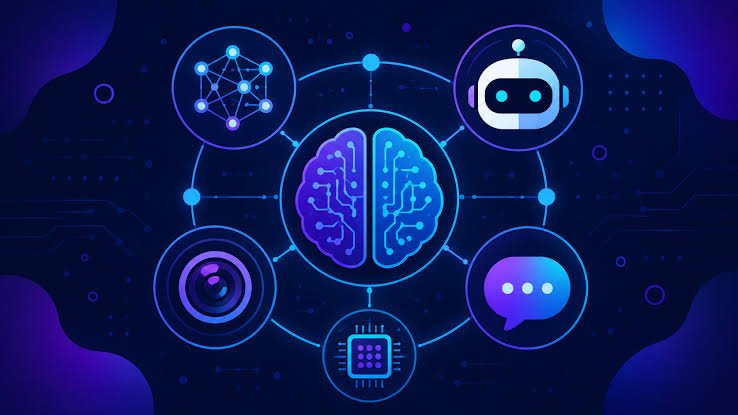
This is why preparing data is an important part of developing an AI system. Developers and data scientists may need to remove duplicate records, correct mistakes, organize information, and decide which parts of the dataset are appropriate for training.
How Training a Machine Learning Model Works
Training begins when an algorithm receives examples and attempts to produce the desired result. At first, the model may make many incorrect predictions because its internal settings have not yet been adjusted to the patterns in the data.
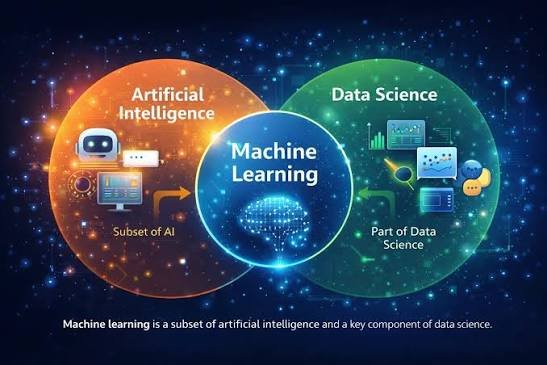
The system compares its output with the expected result and calculates how far its prediction was from the target. This difference is often represented by a mathematical measure called a loss function. The training process then uses optimization techniques to adjust the model’s parameters.
This cycle can happen thousands or millions of times. With repeated exposure to training examples, the model gradually changes its parameters in ways that reduce errors on the training task. The objective is to produce a model that has learned useful general patterns rather than simply memorizing the examples it received.
What Are Machine Learning Algorithms?

A machine learning algorithm is a method used to help a computer identify patterns or make predictions from data. Different algorithms are designed for different types of problems, so there is no single method that works best for every situation.
Some algorithms are relatively simple and can work well with structured information such as tables of numbers. Others, especially neural networks, can handle extremely complex patterns in images, speech, language, and other forms of data. The choice depends on the problem, the available data, computing resources, and the required level of accuracy.
Supervised Learning
In supervised learning, the training examples include known answers or labels. The model uses these examples to learn a relationship between inputs and desired outputs.
Suppose a company wants to identify potentially fraudulent transactions. Historical transactions could be labeled as legitimate or fraudulent. A model can study characteristics associated with those examples and then estimate the likelihood that a new transaction belongs to one of the categories.
Unsupervised Learning
Unsupervised learning works with data that does not necessarily have predefined labels. Instead of being told the correct category, the algorithm attempts to discover structure within the information.
One common application is grouping similar customers based on purchasing behavior. The system may identify several groups without being explicitly told what those groups should represent. A business can then examine those patterns and decide whether they are useful for marketing or customer analysis.
Reinforcement Learning
Reinforcement learning uses a different approach. An AI agent interacts with an environment and receives feedback based on its actions. Positive feedback can encourage certain behaviors, while negative feedback can discourage others.
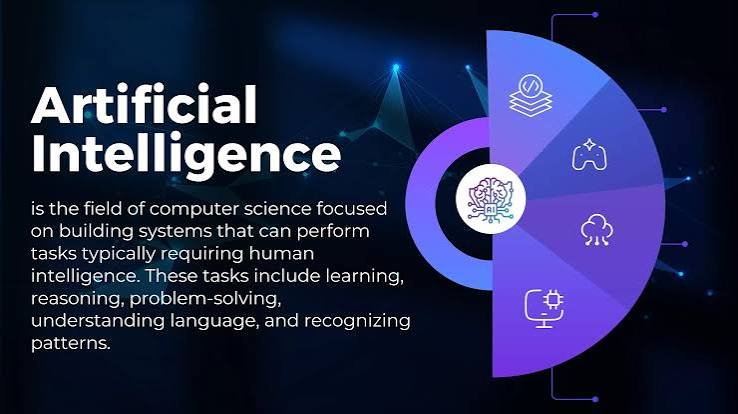
This approach has been used in areas such as game-playing systems, robotics, and decision-making research. Over many interactions, the system attempts to develop a strategy that produces better long-term results.
The Role of Neural Networks
Neural networks are machine learning models inspired loosely by the way biological nervous systems process information. They contain connected computational units arranged into layers. Modern neural networks can contain many layers and a very large number of adjustable parameters.
During training, these parameters are modified as the model processes examples. The network can gradually become better at recognizing complex relationships within the data. Different layers can contribute to processing information at different levels of abstraction.
For example, when processing an image, early parts of a neural network may respond to simple visual features, while deeper layers can combine those features into more complex representations. In language systems, neural networks can learn statistical relationships among words and other elements of text.
What Happens During Model Training?
Training a model usually involves repeatedly feeding data into the system in manageable groups. These groups are often called batches. After processing a batch, the model calculates its error and updates its parameters.
A technique known as backpropagation is commonly used with neural networks. It helps determine how different parameters contributed to the model’s error. An optimization method can then use this information to make adjustments.

The process is repeated across the training dataset. One complete pass through the available training examples is commonly called an epoch. Large models may require many epochs or enormous amounts of computational work before training produces useful results.
Training Data and Testing Data Are Different
A model needs to be evaluated using information that it did not simply memorize during training. For this reason, datasets are often divided into separate portions for training and evaluation.
The training portion is used to adjust the model. Another portion can be reserved for validation or testing so developers can examine how the model performs on previously unseen examples.
This distinction is important because a model can appear highly accurate on its training data while performing poorly on new information. Such a problem is known as overfitting. It means the model has become too closely adapted to the training examples instead of learning patterns that generalize well.
How AI Handles New Information
After training is completed, a model can be used to process new inputs. This stage is often called inference. The model applies the patterns represented by its learned parameters to information it has not previously encountered.

For example, a trained email classification model can examine a new message and estimate whether it belongs to a spam category. A recommendation system can analyze information about a user’s activity and produce suggestions based on patterns learned from many interactions.
The model is not necessarily searching through a database for an identical answer. Instead, it uses its learned mathematical representation to generate a prediction, classification, recommendation, or other output.
Why More Data Does Not Always Mean Better AI
It is easy to assume that giving an AI system more information will automatically make it smarter. In reality, the relationship between data and performance is more complicated.
High-quality and relevant examples can be extremely valuable, while large amounts of poor-quality information may introduce noise or reinforce unwanted patterns. If a dataset does not adequately represent the situations a model will encounter in the real world, its performance may also suffer.
Data diversity matters as well. A system trained mostly on one type of user, environment, language, or situation may behave less reliably when exposed to conditions that were poorly represented during training.
What Is Bias in Machine Learning?
Machine learning models can reflect patterns and biases present in their training data. If certain groups or situations are underrepresented, the resulting system may perform differently across those groups.
Bias can enter a project through many sources, including how data is collected, which examples are selected, how labels are created, and how the problem itself is defined. It is therefore not enough to focus only on the algorithm.
Developers can use techniques such as dataset analysis, evaluation across different groups, human review, and carefully designed testing to identify potential problems. Responsible AI development requires attention to both technical performance and the quality of the data behind a system.
Does AI Understand What It Learns?
An important distinction is that machine learning does not automatically mean human-like understanding. A model can become highly capable at recognizing patterns without possessing human awareness or experience.
For instance, a language model can learn statistical relationships between words and produce remarkably coherent text. That does not by itself establish that the system understands language in the same subjective way a person does.
The word “learning” therefore describes a technical process of adjusting a model based on data. It should not automatically be interpreted as evidence that a machine thinks or understands exactly like a human.
Where Machine Learning Is Used Today
Machine learning is now part of many everyday technologies. Search engines use algorithms to organize and rank information, streaming services use models to generate recommendations, and financial systems can use machine learning to identify unusual transaction patterns.

It is also used in image recognition, speech processing, language translation, medical research, manufacturing, cybersecurity, and scientific analysis.
As computing resources and datasets have expanded, machine learning has become increasingly capable of handling complex tasks. At the same time, many systems still require human oversight, especially when their decisions can have significant consequences.
How AI Can Improve After Deployment
Learning does not always end when a model is first released. Developers can monitor how a system performs and collect new information about errors or changing conditions. In some applications, this information can later be used to improve a future version.
This is particularly important because real-world data can change over time. Customer behavior, language, market conditions, security threats, and other factors may evolve, causing a model trained on older information to become less suitable.
Regular evaluation can help identify these changes. Depending on the system, developers may retrain, fine-tune, replace, or otherwise update a model when its performance no longer meets the intended requirements.
The Future of Learning From Data
As AI research continues, machine learning systems are being developed to work with increasingly complex combinations of information. Models can process different types of data and learn relationships across text, video, and numerical information.
Future systems may become more efficient in how they use training data and computing resources. Researchers are also exploring methods that can help models learn from fewer examples, adapt to new tasks, and operate more reliably in changing environments.
However, technical progress does not remove the need for careful evaluation. Better AI depends not only on larger models but also on appropriate data, effective testing, transparent development practices, and responsible deployment.
Conclusion
Artificial intelligence learns from data through machine learning processes that allow algorithms to identify patterns and adjust their internal parameters. Training examples, mathematical optimization, model evaluation, and repeated improvement all contribute to creating systems that can make predictions or perform specific tasks on new information.
The key idea is simple: data provides examples, algorithms provide the learning process, and trained models use the patterns they have discovered to handle new inputs. Understanding this basic relationship makes it easier to see how technologies such as recommendation engines, image recognition systems, language tools, and many other AI applications work behind the scenes.